Overview
Local vaginal estrogen therapy is used to improve vaginal tissue health in women with estrogen deficiency. It can reduce symptoms of vaginal dryness, irritation, dyspareunia, and recurrent urinary symptoms. Systemic absorption is minimal at standard doses, making it a safe option for most women.
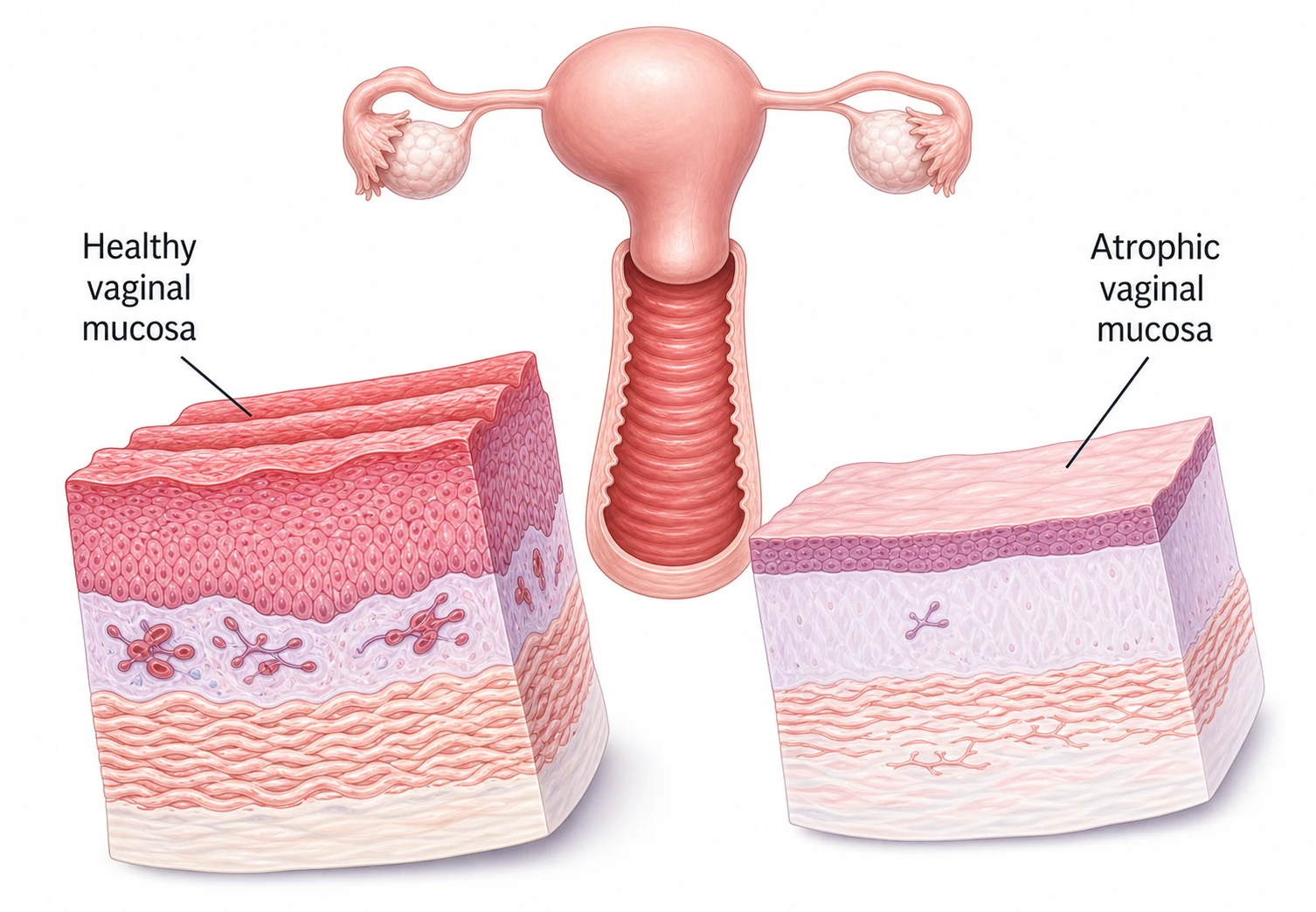
Indications
- Genitourinary Syndrome of Menopause (GSM)
- Vaginal dryness and atrophy
- Recurrent urinary tract infections
- Urinary urgency, frequency, and dysuria related to estrogen deficiency
- Adjunctive therapy with pessary use
Available Formulations
- Vaginal estradiol cream
- Vaginal estradiol tablets
- Estradiol vaginal ring (releases hormone slowly over three months)
- Conjugated estrogen cream
- Estriol cream (available in some regions)
How to Use
Treatment is typically initiated with more frequent application (usually daily for 2 weeks) and then transitioned to a maintenance schedule (usually twice weekly). Improvement may take several weeks to months to become apparent.
Safety
For most patients, low-dose vaginal estrogen has minimal systemic absorption and a progestin is not routinely required, but unexplained postmenopausal bleeding must be assessed. Individual product dosing and contraindications should be reviewed with a clinician.
For patients with a history of estrogen-dependent breast cancer, nonhormonal treatments are generally tried first. If symptoms persist, low-dose vaginal estrogen may be considered through shared decision-making with the clinician managing the cancer history. Patients taking an aromatase inhibitor should include their oncologist in that decision.
Important Considerations
- Benefits are maintained only with ongoing use — symptoms will recur when treatment is stopped
- Vaginal estrogen can be used in combination with other treatments (pessaries, PFMT)
- It does not provide the systemic benefits of hormone replacement therapy
Safety and Considerations
Low-dose products act mainly on vaginal tissues, but systemic absorption varies by formulation and dose. Available preparations are generally effective for GSM, and the choice depends on symptoms, usability, cost, and preference. Side effects may include local irritation or spotting; new or persistent bleeding requires assessment. For people with prior breast cancer, available safety evidence is reassuring but not absolute and does not replace individualized shared decision-making.
Sources
Clinical content updated July 2026. Source: ACOG Clinical Consensus: Urogenital Symptoms in Individuals With a History of Estrogen-dependent Breast Cancer.