Overview
Posterior colporrhaphy (posterior repair) is a vaginal surgical procedure to correct prolapse of the back wall of the vagina (rectocele), where the rectum bulges into the vaginal canal. It may be combined with perineorrhaphy (repair of the perineal body) when there has been perineal descent.
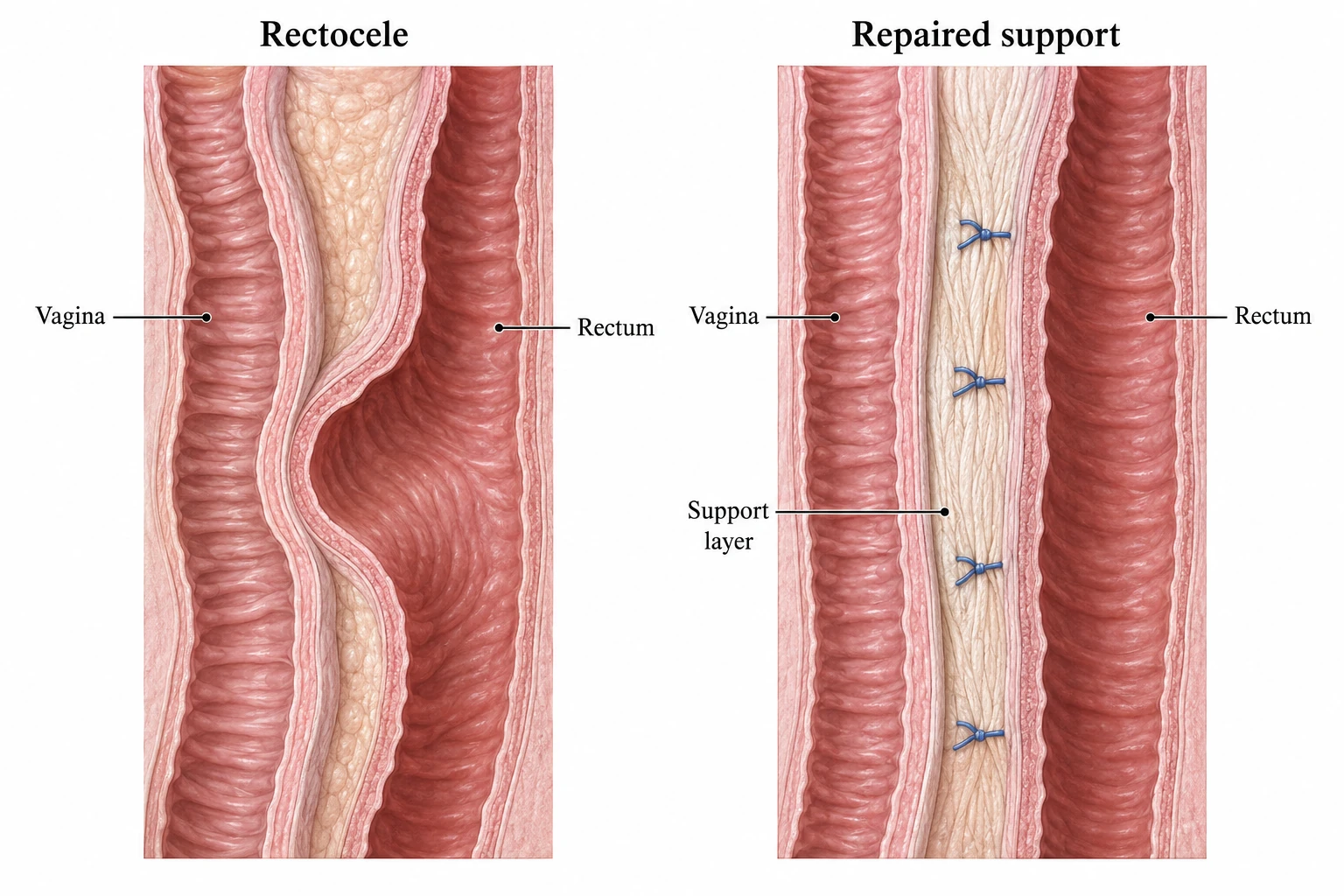
Schematic close-up of rectocele and the reinforced support layer; not an operative view.
Indications
- Symptomatic posterior compartment prolapse (rectocele)
- Difficulty with bowel movements, incomplete emptying, or needing to splint (press on the vaginal wall) to evacuate
- Vaginal bulge causing discomfort
The Procedure
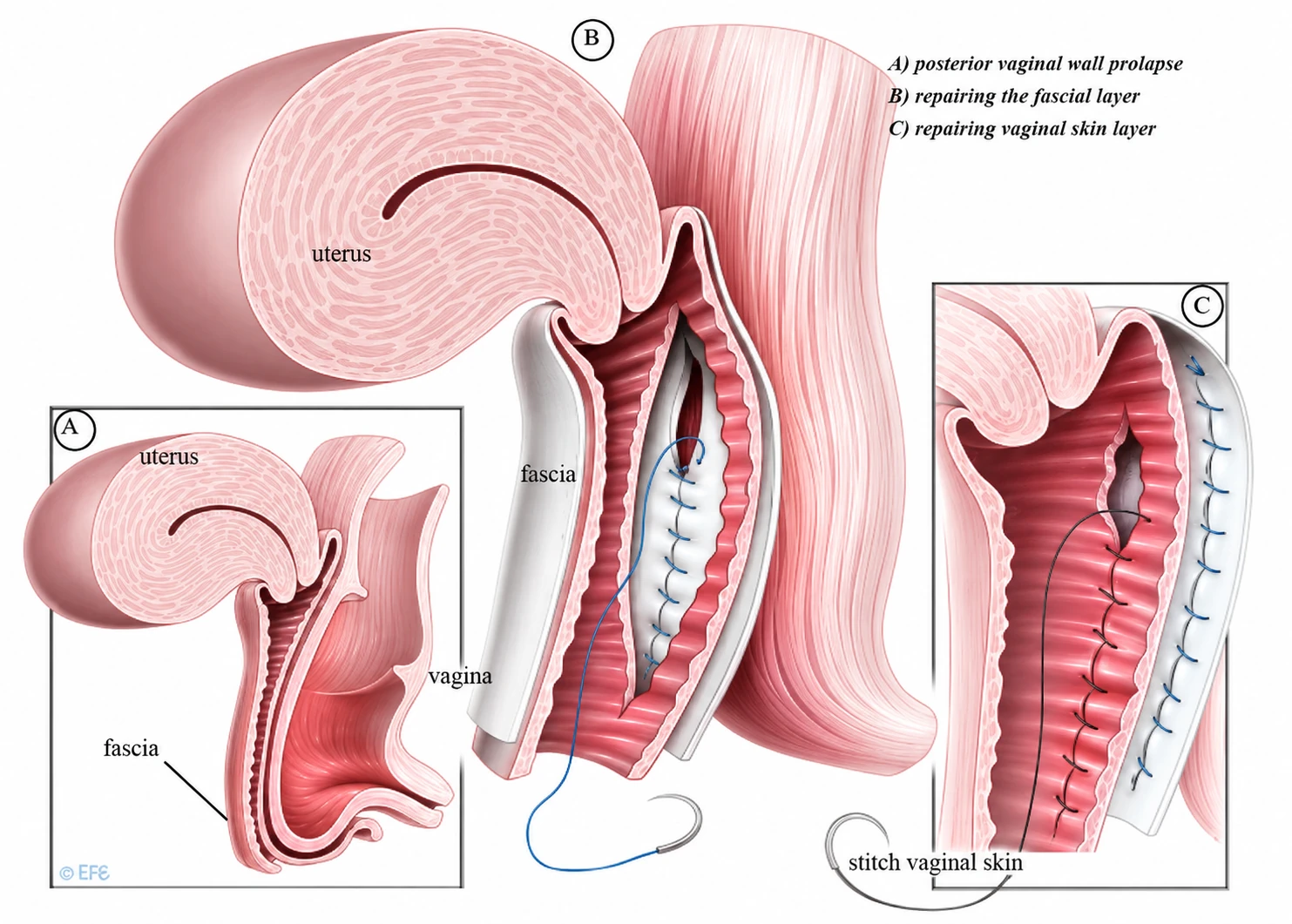
An incision is made in the back wall of the vagina. The tissue between the vagina and rectum (rectovaginal fascia) is identified and reinforced with stitches. If a perineorrhaphy is also performed, the perineal muscles are reapproximated. Excess vaginal tissue may be trimmed, and the incision is closed.
Recovery
- Hospital stay: typically 1 night
- Return to light activities: 1-2 weeks
- Full recovery: approximately 6 weeks
- Bowel function may take a few days to normalize — stool softeners are usually recommended
- Sexual intercourse: usually after 8 weeks
Risks and Expectations
Posterior repair is intended to improve a vaginal bulge and may help splinting or stool trapping caused by a rectocele. Constipation and incomplete bowel emptying often have several causes, so bowel symptoms may persist and the operation is not a general treatment for constipation. Outcomes also depend on baseline anatomy and length of follow-up. Potential risks include:
- Prolapse recurrence — the prolapse may return over time
- Urinary tract infection
- Dyspareunia or vaginal narrowing — some patients develop new or worsened discomfort during penetration, particularly when perineorrhaphy is added
- Constipation — common in the short-term after surgery
- Bleeding — occasionally requiring transfusion
- Rectal injury — very uncommon but possible during surgery
Posterior repair is commonly performed in combination with other prolapse procedures.
Sources
Clinical content updated July 2026. Source: NICE Guideline: Urinary Incontinence and Pelvic Organ Prolapse in Women.