Overview
Pelvic floor muscle training (PFMT) aims to improve strength, coordination, and endurance of the pelvic floor muscles. These exercises are the cornerstone of conservative management for urinary incontinence, fecal incontinence, and pelvic organ prolapse. Treatment is often guided by trained pelvic floor physiotherapists who provide individualized programs with regular assessment.
How It Works
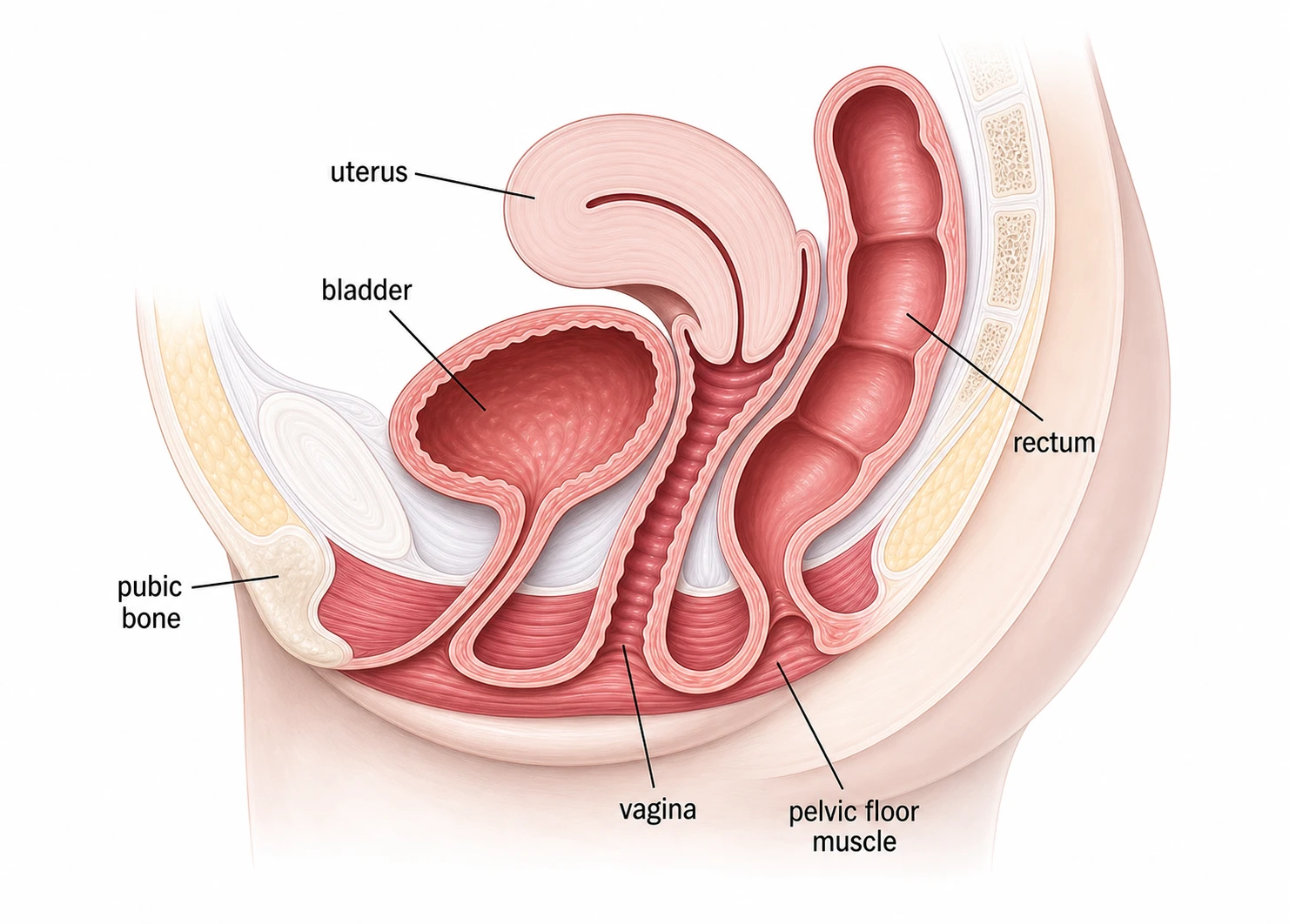
The pelvic floor comprises a group of muscles that form a supportive platform between the tailbone and pubic bone. These muscles support the bladder, uterus, and rectum, and help control the release of urine and stool. When these muscles weaken — due to childbirth, aging, menopause, or other factors — symptoms such as urinary leakage, pelvic heaviness, and bowel control difficulties may develop.
PFMT involves learning to identify, contract, and relax these muscles correctly. Proper technique is essential, as many women initially perform the exercises incorrectly without professional guidance.
Conditions Treated
- Stress urinary incontinence
- Urgency urinary incontinence and overactive bladder
- Mixed urinary incontinence
- Mild to moderate pelvic organ prolapse
- Fecal incontinence
- Chronic pelvic pain (relaxation and down-training)
- Pre- and post-surgical optimization
What to Expect
A pelvic floor physiotherapist will:
- Assess your pelvic floor muscle strength, coordination, and endurance
- Develop a personalized exercise program
- Teach correct technique (biofeedback may be used)
- Monitor progress and adjust the program over time
For stress or mixed urinary incontinence, a supervised program is commonly continued for at least three months before its full effect is assessed. Duration and expected benefit vary with the diagnosis and the individual's starting function.
At-Home Practice
Between appointments, you will practice exercises at home. Consistency is key — like any exercise program, the benefits depend on regular practice over time. Your physiotherapist will provide guidance on the number and frequency of exercises.
Important Considerations
- PFMT is recommended as first-line treatment for stress or mixed urinary incontinence before considering surgical options
- For women with pelvic pain, the focus may be on relaxation rather than strengthening
- Pre-surgery pelvic floor training may improve muscle awareness and symptom management, but it does not guarantee a better surgical outcome
Effectiveness
Supervised pelvic floor muscle training can meaningfully improve stress urinary incontinence and may avoid or delay surgery. Correct diagnosis and technique are essential. Repeated strengthening can aggravate pain, urgency, or emptying symptoms when the pelvic floor is high-tone or cannot relax; in that situation, manual therapy, relaxation, and down-training may be more appropriate.
Sources
Clinical content updated July 2026. Sources: NICE Guideline: Urinary Incontinence and Pelvic Organ Prolapse in Women and AUA IC/BPS Guideline.