Overview
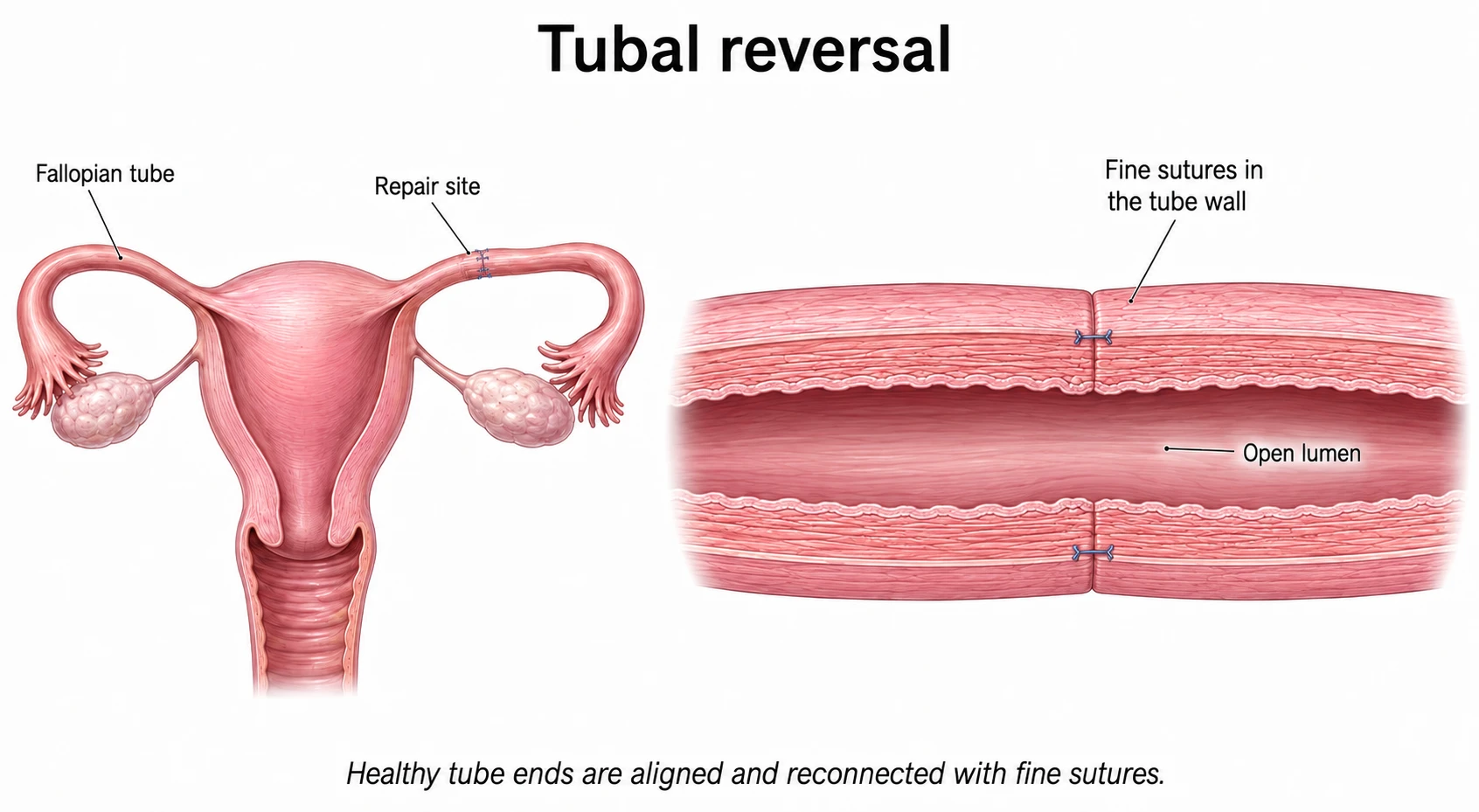
Laparoscopic tubal reversal (tubal reanastomosis) is a keyhole microsurgical procedure to reconnect the fallopian tubes after a previous tubal ligation. The goal is to restore the natural pathway for the egg and sperm to meet, allowing the possibility of natural conception.
This procedure is not always technically possible. If the remaining tubes are too short, too damaged, or too close to the uterine corner (cornua) to repair safely, Dr. Kruger may perform diagnostic laparoscopy only and not proceed with the reversal.
Who May Be a Candidate
- Desire to conceive naturally after previous tubal ligation
- Suitable tubal anatomy with enough healthy tube remaining for a tension-free repair
- A ligation method that left healthy tubal segments, such as clips or rings, rather than extensive cautery or removal
- Reassuring ovarian reserve testing and no major additional infertility factors
- Partner semen analysis that does not suggest a severe male-factor infertility issue
- Understanding that IVF should also be considered as an alternative
Pre-operative Assessment
Before proceeding with tubal reversal, a thorough assessment is performed to determine suitability:
- Review of operative records: To determine the method and site of the original tubal ligation
- Ovarian reserve testing: Blood tests such as cycle day 3 hormones and other fertility markers when appropriate
- Semen analysis: Evaluation of the partner's fertility
- Pelvic ultrasound: To assess uterine and ovarian anatomy
- Age and fertility counselling: Success rates are strongly influenced by age and egg quality
- IVF discussion: IVF may be more appropriate when tubal anatomy is unfavorable, ovarian reserve is low, or other infertility factors are present
Surgical Technique
- Performed under general anesthesia using a laparoscopic approach with microsurgical instruments
- 3–4 small abdominal incisions (5–12 mm)
- The blocked or ligated segments of the fallopian tube are identified, trimmed, and the healthy tubal ends are precisely realigned
- The tubal lumen is reconnected using fine microsurgical sutures under magnification
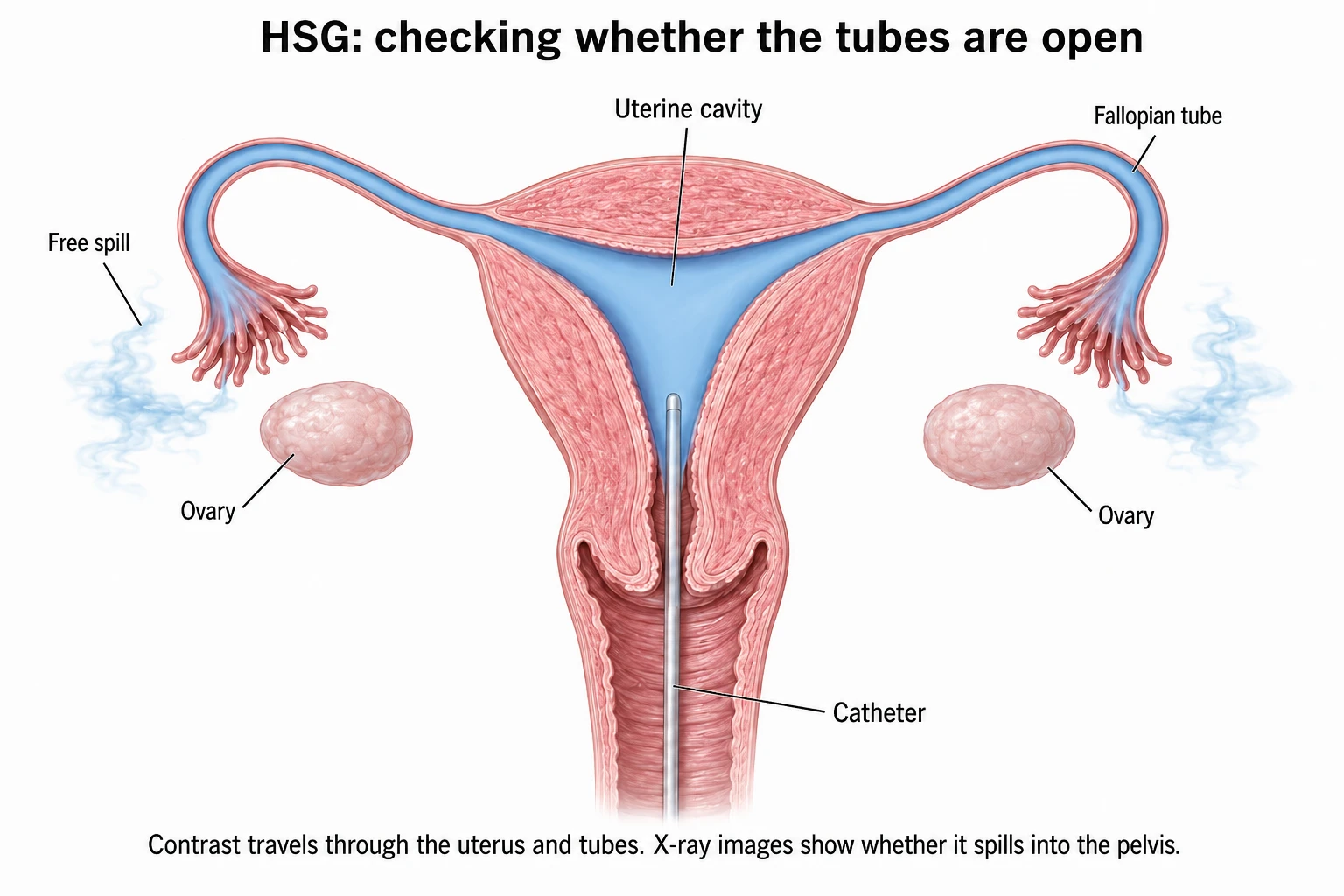
- Tubal patency is confirmed intraoperatively by chromopertubation (dye test through the cervix)
- If the tube length or location is not suitable for repair, the procedure may stop after diagnostic assessment
What to Expect After Surgery
- Usually performed as a day surgery procedure; some patients stay overnight
- Mild pelvic discomfort for several days, managed with simple analgesia
- Return to light activities within 1–2 weeks
- Full recovery: approximately 2–4 weeks
- Follow the individualized advice about when to begin pregnancy attempts
- An HSG may be offered after healing to check whether one or both tubes are open; an open tube does not guarantee pregnancy
Success Rates
Technical patency, clinical pregnancy, and live birth are different outcomes. Published results vary widely, and an individualized estimate should be based on:
- Age and ovarian reserve: Younger age and better ovarian reserve are associated with higher pregnancy rates
- Type of original ligation: Clip or ring sterilization generally has better outcomes than procedures that destroy longer segments of tube, such as extensive cautery
- Remaining tubal length: Longer remaining segments are associated with higher success
- Distance from the cornua: Repairs close to the uterine corner can be more difficult and may have lower success
- Other fertility factors: Sperm quality, ovulation, endometriosis, adhesions, and pelvic anatomy all matter
Even when a tube is open, pregnancy is not guaranteed. Some patients will still need fertility treatment or IVF, and time to pregnancy matters more as age-related fertility declines.
Tubal Reversal vs. IVF
The choice between tubal reversal and IVF depends on individual circumstances. IVF should be considered in every counselling discussion because it bypasses the fallopian tubes entirely.
Tubal reversal may be preferred when:
- Multiple pregnancies are desired (each cycle provides an opportunity to conceive naturally)
- Age and tubal anatomy are favorable
- The patient prefers natural conception
IVF may be preferred when:
- Tubal anatomy is unfavorable for successful reconnection
- There are additional fertility factors (male factor, diminished ovarian reserve)
- IVF offers a better individualized balance of time, likelihood of success, cost, or number of desired pregnancies
Risks and Follow-up
Potential risks include:
- Ectopic pregnancy — risk is higher after tubal surgery. Report any positive pregnancy test promptly so serial blood tests and/or early ultrasound can confirm location. One-sided pain, shoulder pain, dizziness, fainting, or heavy bleeding requires emergency assessment.
- Failure to achieve pregnancy — reversal does not guarantee fertility
- Bleeding — occasionally requiring transfusion
- Injury to surrounding structures — uncommon
- Infection — wound or pelvic infection
- Adhesion formation — scar tissue may affect tubal function
Because ectopic pregnancy risk is increased, early pregnancy monitoring is important. Ultrasound is arranged when timing and pregnancy-hormone levels are appropriate to confirm that the pregnancy is inside the uterus.
Private Pay Considerations
Laparoscopic tubal reversal is not covered under AHS and is a private-pay service. Costs may include hospital, surgical, and anesthetist fees. Fees and cancellation-list options are reviewed before booking so patients can make an informed decision.
Sources
Clinical content updated July 2026. Source: ASRM Committee Opinion: Role of Tubal Surgery in the Era of Assisted Reproductive Technology.