Overview
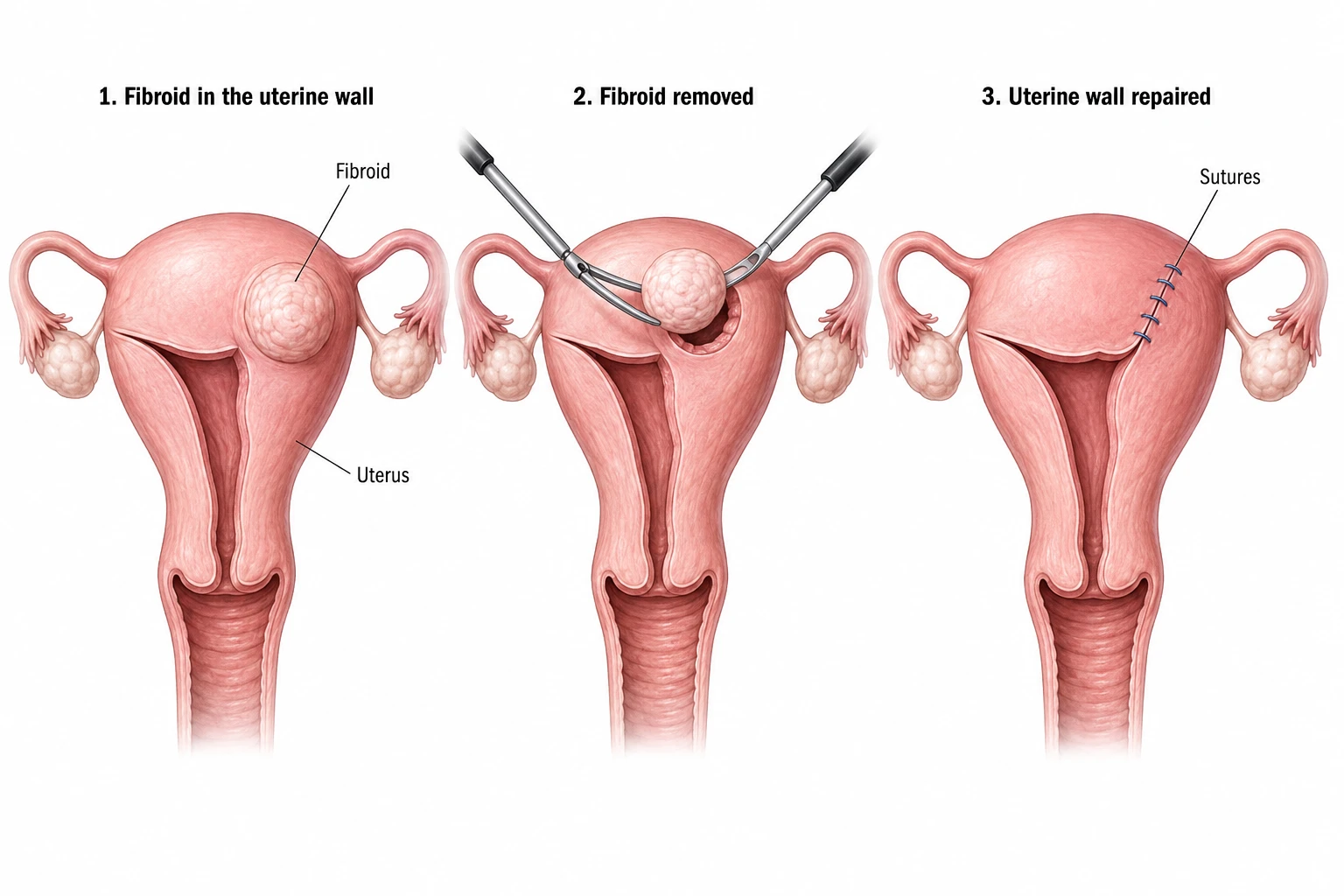
Myomectomy is the surgical removal of uterine fibroids while preserving the uterus. A laparoscopic approach may be appropriate for selected patients depending on fibroid size, number, and location. It preserves the possibility of carrying a pregnancy but does not guarantee future fertility or pregnancy.
Indications
- Symptomatic fibroids (heavy bleeding, pelvic pressure, pain)
- Fibroids contributing to infertility
- Desire to preserve the uterus
- Fibroids amenable to minimally invasive removal based on size and location
The Procedure
Through 3-4 small abdominal incisions, each planned fibroid is identified and enucleated (shelled out) from the uterine muscle, and the uterus is repaired in layers using sutures. The specimen may be removed intact through the vagina or a small incision, or divided into smaller pieces. If power morcellation is considered appropriate for a carefully selected patient, a compatible containment system should be used.
No pre-operative test identifies every uterine sarcoma. Dividing an unexpected cancer can spread it and worsen prognosis. The likelihood of occult malignancy increases with age, and power morcellation is not used when cancer is known or suspected. Containment reduces tissue spread but cannot remove every risk.
Recovery
- Hospital stay: typically 0-1 night
- Return to light activities: 1-2 weeks
- Full recovery: approximately 4-6 weeks
- Heavy lifting restriction: usually 6 weeks
Considerations
- New fibroids may develop later from uterine muscle that remains; this is not caused by "cells left behind" from a removed fibroid
- The uterine scar may affect timing of conception and future delivery planning; cesarean delivery may be recommended depending on the depth and location of the incisions
- Not all fibroids are suitable for laparoscopic removal; very large or numerous fibroids may require an open approach
- Hysteroscopic myomectomy is preferred for fibroids that protrude into the uterine cavity
Risks and Expectations
Laparoscopic myomectomy is effective for relieving symptoms caused by fibroids while preserving the uterus. Potential risks include:
- Bleeding — occasionally significant, with a small risk of requiring transfusion or conversion to hysterectomy
- Fibroid recurrence — new fibroids may develop over time, with some women eventually requiring repeat surgery or hysterectomy
- Adhesion formation — scar tissue may form after surgery, potentially affecting fertility or causing pain
- Injury to surrounding structures — uncommon
- Uterine rupture in future pregnancy — rare but recognized risk, particularly with deep myometrial entry; delivery planning should be discussed with your obstetrician
- Conversion to open surgery — occasionally necessary depending on fibroid size or location
Rarely, uncontrolled bleeding or an unexpected finding may require hysterectomy. Before surgery, counselling should cover fertility goals, alternatives, the proposed specimen-extraction method, the small risk of unexpected malignancy, and the possible need for future fibroid treatment.
Sources
Clinical content updated July 2026. Source: FDA Safety Communication on Contained Morcellation.