Overview
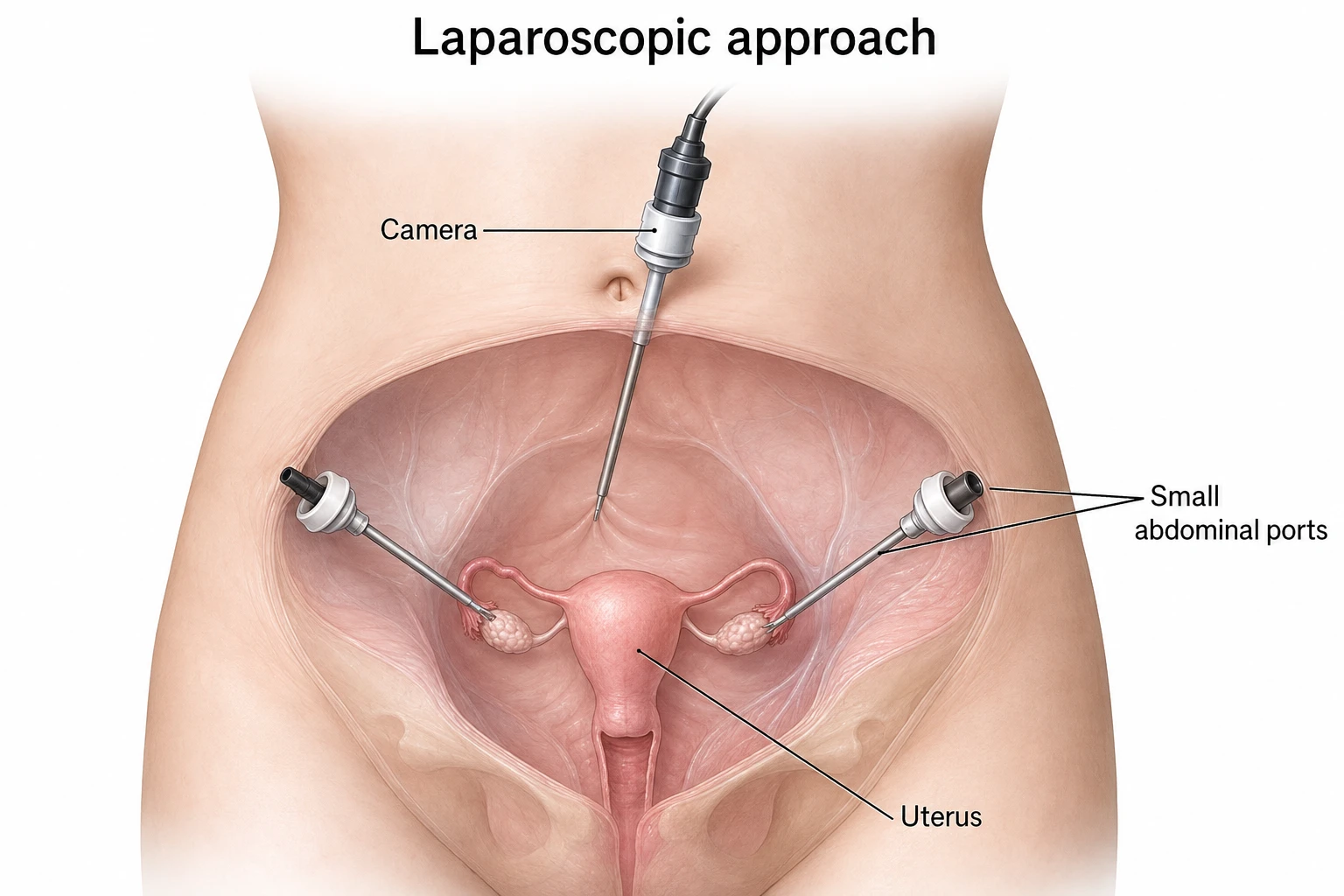
Laparoscopic hysterectomy involves removal of the uterus using minimally invasive techniques through small abdominal incisions. Compared with traditional open surgery, laparoscopy is often associated with less postoperative pain, a shorter hospital stay, a shorter recovery, and smaller scars, although individual recovery varies.
Types
- Total laparoscopic hysterectomy: Removal of the uterus and cervix
- Supracervical (subtotal) hysterectomy: Removal of the uterine body while preserving the cervix. Some patients continue to have cyclical spotting, and routine cervical screening continues if the cervix remains.
- Removing the uterus permanently ends the ability to carry a pregnancy. The ovaries and fallopian tubes are separate structures and are not automatically removed.
How It Is Done
The procedure is performed with a camera and long instruments placed through small abdominal ports. The uterus is separated from its supporting tissues and blood supply, then removed intact through the vagina or a small incision when feasible. If tissue must be divided for removal, the extraction method—including whether contained manual or power morcellation is proposed—is discussed before surgery. When the cervix is removed, the top of the vagina is closed internally, creating a vaginal cuff.
No pre-operative test can identify every uterine sarcoma. Morcellating an unexpected cancer can spread it and worsen prognosis. Power morcellation is not used when malignancy is known or suspected and, when considered appropriate for a carefully selected patient, should be performed with a compatible containment system. Containment reduces tissue spread but cannot eliminate every risk.
Indications
- Abnormal uterine bleeding unresponsive to medical management
- Symptomatic uterine fibroids
- Endometriosis
- Chronic pelvic pain
- Pelvic organ prolapse
- Uterine precancer or cancer (in selected cases)
What to Expect
- Performed under general anesthesia
- 3-4 small incisions (5-12 mm) on the abdomen
- Hospital stay: typically 0-1 night
- Return to light activities: 1-2 weeks
- Full recovery: approximately 4-6 weeks
- No more menstrual periods after the procedure
Ovarian Conservation
Decisions regarding the ovaries are individualized based on age, menopausal status, symptoms, cancer risk, and patient preference. Removing both ovaries before natural menopause causes immediate surgical menopause and has health effects that should be discussed. When ovaries are conserved, removal of the fallopian tubes (opportunistic salpingectomy) may reduce future tubo-ovarian cancer risk without eliminating it.
Risks and Expectations
Laparoscopic hysterectomy is a well-established procedure with high rates of patient satisfaction. When vaginal hysterectomy is not appropriate or feasible, a laparoscopic approach is often preferred over open abdominal hysterectomy because it avoids a large abdominal incision and usually allows a shorter hospital stay and recovery. Potential risks include:
- Injury to bladder, ureters, or bowel — occurs in approximately 1–2% of cases
- Bleeding requiring transfusion — uncommon
- Vaginal cuff dehiscence — rare separation of the vaginal cuff closure
- Urinary tract infection — common in the early post-operative period
- Venous thromboembolism — rare
- Conversion to open surgery — occasionally necessary
- Vaginal vault prolapse — may develop years after hysterectomy in some women
All removed tissue is sent for pathology. The consent discussion should cover alternatives, the planned extraction method, the small possibility of unexpected malignancy, ovarian conservation, fallopian-tube removal, and whether the cervix will remain.
Sources
Clinical content updated July 2026. Sources: FDA Safety Communication on Contained Morcellation and ACOG Committee Opinion: Opportunistic Salpingectomy.