Overview
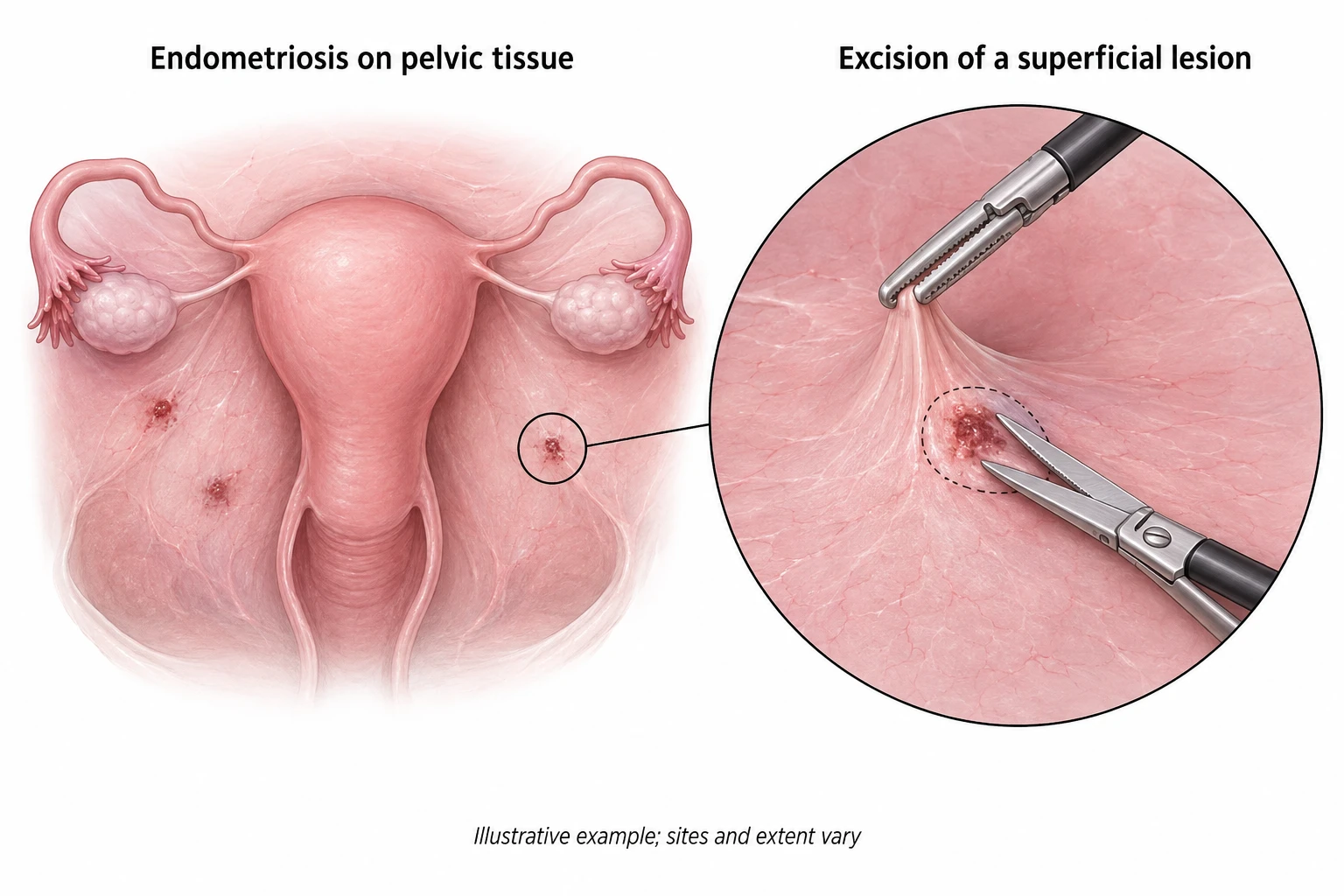
Laparoscopic surgery may be offered to selected patients with endometriosis. Visible lesions can be excised (cut out) or, in some situations, ablated. Excision provides tissue for pathology and may be preferred for some deep lesions, but surgery cannot guarantee that every microscopic lesion is removed, that pain or fertility will improve, or that endometriosis will not recur.
When Is Surgery Considered?
Surgical intervention is most often considered when:
- Symptoms persist despite optimized medical therapy
- Hormonal treatments are not tolerated or are contraindicated
- Deep infiltrating disease is suspected
- Fertility preservation or restoration is a priority
- Tissue confirmation is expected to change management
Surgical Approach
Disease may involve the peritoneum, ovaries, uterosacral ligaments, rectovaginal septum, bladder, ureters, or bowel. Surgical complexity depends on location and depth. The plan aims to balance symptom relief with safe preservation of normal anatomy, organ function, and fertility goals.
Peritoneal Endometriosis
Visible superficial implants on the pelvic peritoneum may be excised or ablated. Not every subtle area is endometriosis, and pathology can help confirm excised disease.
Deep Infiltrating Endometriosis (DIE)
DIE may affect pelvic nerves, the urinary tract, or the gastrointestinal system. Surgical management may include:
- Ureterolysis (freeing the ureters from surrounding disease)
- Bladder dissection
- Rectovaginal or bowel shaving
- Segmental bowel resection in selected cases
Ovarian Endometriomas
When surgery is chosen, cystectomy may reduce pain and recurrence more than drainage alone, but it can also reduce ovarian reserve. Tissue-sparing technique and fertility goals are important, especially after previous ovarian surgery.
Post-Operative Management
Post-operative hormonal treatment may be offered to reduce recurrence of symptoms or disease when pregnancy is not being pursued immediately. Pelvic floor physiotherapy and pain-focused interventions may be incorporated as needed.
Outcomes
Endometriosis surgery should be guided by realistic expectations and shared decision-making. The goals may include symptom improvement, treatment of organ involvement, restoration of anatomy, and preservation of organ function. Some patients continue to have pain or require medical and multidisciplinary care after surgery.
Risks and Expectations
Some patients experience meaningful pain improvement after surgery, while others have persistent or recurrent symptoms. The likelihood of benefit and the risk profile depend on disease location, prior surgery, other pain contributors, and the planned procedure. Potential risks include:
- Injury to bowel, bladder, or ureters — risk depends on the location and extent of disease
- Bleeding — occasionally requiring transfusion
- Persistent or recurrent symptoms — visible disease may recur, and pain can persist even when lesions are treated
- Adhesion formation — scar tissue may develop after surgery
- Conversion to open surgery — occasionally necessary for extensive disease
- Infection — wound or pelvic infection
- Venous thromboembolism — rare
Sources
Clinical content updated July 2026. Source: ESHRE Guideline: Endometriosis (2022).