Overview
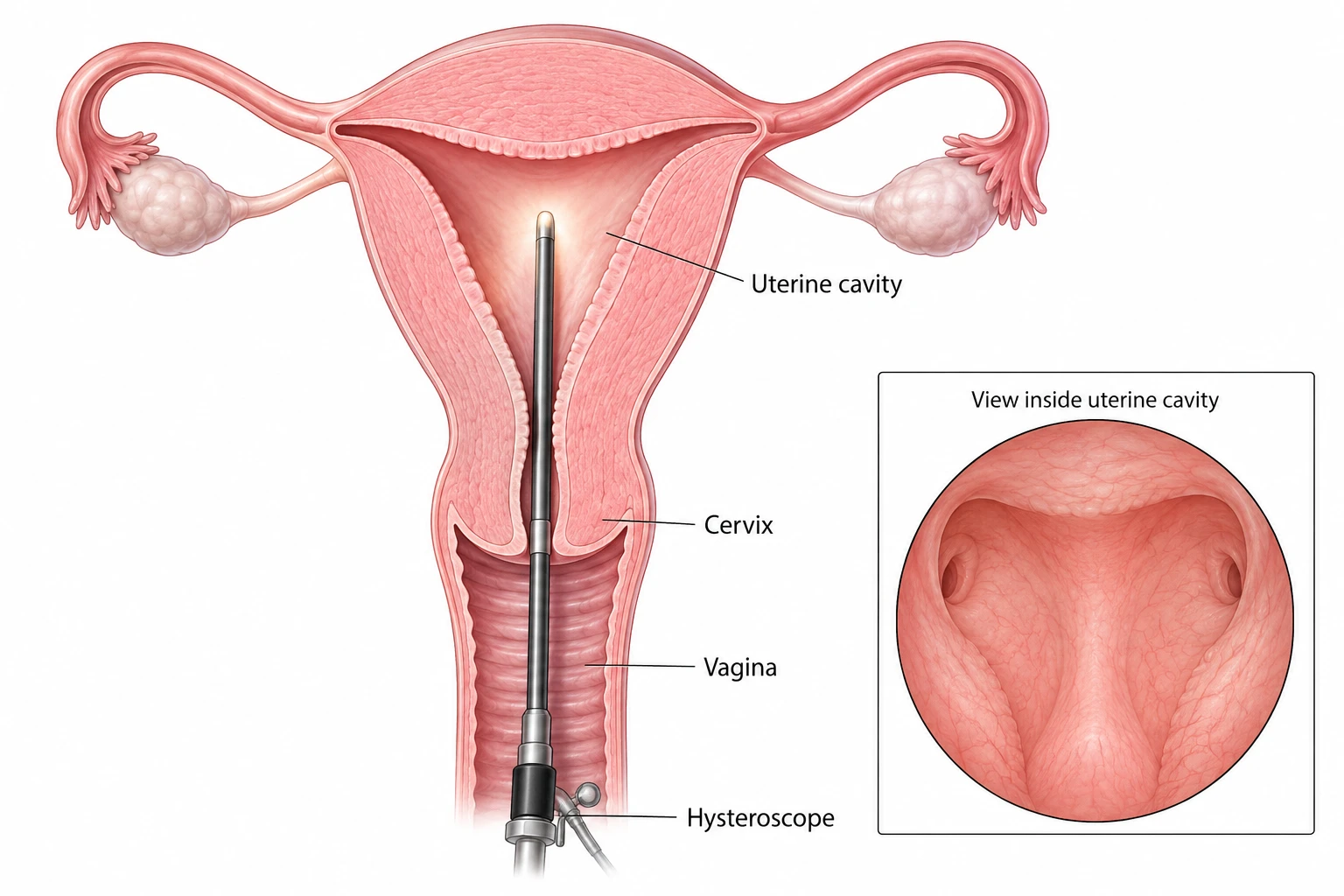
Hysteroscopy is a procedure that allows direct visualization of the inside of the uterus using a thin, lighted telescope (hysteroscope) passed through the vagina and cervix. It can be performed for diagnostic purposes or to treat conditions within the uterine cavity. Many hysteroscopic procedures can be done in the office without general anesthesia.
When Is It Considered?
Hysteroscopy may be recommended for:
- Abnormal uterine bleeding (heavy, prolonged, or irregular periods)
- Postmenopausal bleeding
- Suspected uterine polyps or fibroids
- Evaluation of abnormal findings on ultrasound
- Recurrent pregnancy loss
- Retained intrauterine device (IUD) removal
- Uterine adhesions (Asherman syndrome)
- Abnormal uterine cavity findings on imaging
Types of Hysteroscopy
Diagnostic Hysteroscopy
- Used to examine the uterine cavity and identify abnormalities
- Often performed in the office setting with local anesthesia or no anesthesia
- The vaginoscopic ("no-touch") technique avoids the need for a speculum or tenaculum, reducing discomfort
Operative Hysteroscopy
- Performed to treat identified pathology within the uterine cavity
- May involve removal of polyps, fibroids, adhesions, or uterine septa
- Typically performed in an operating room under general or regional anesthesia, though some procedures can be done in-office
The Procedure
- A thin hysteroscope is passed through the cervix into the uterine cavity
- The uterus is gently distended with saline to allow clear visualization
- Instruments can be passed through the hysteroscope to biopsy, remove, or treat abnormalities
- Diagnostic hysteroscopy typically takes 10-15 minutes; operative procedures may take 30-60 minutes depending on the complexity
- Ideally performed in the follicular phase (after menstruation) in premenopausal women
What to Expect After
- Mild cramping similar to menstrual pain is common and usually resolves within a few hours
- Light vaginal bleeding or spotting may occur for several days
- Most patients return to normal activities within 24-48 hours
- Avoid intercourse, tampons, and douching for approximately two weeks following operative procedures
- A follow-up appointment will be arranged to review findings and discuss any pathology results
Risks and Expectations
Risk depends on whether the procedure is diagnostic or operative, the instruments used, the finding being treated, anesthesia, and individual health factors. Potential risks include:
- Uterine perforation — may be managed with observation or may require laparoscopy or another procedure depending on the instrument used and concern for injury
- Bleeding — uncommon, occasionally requiring further intervention
- Infection — rare
- Fluid overload — a rare risk with operative procedures involving uterine distension media
- Incomplete procedure — occasionally cervical stenosis or poor visualization may limit the examination
Seek prompt care after hysteroscopy for heavy bleeding, fever, foul discharge, worsening pain, fainting, shortness of breath, or feeling systemically unwell.
Sources
Clinical content updated July 2026. Source: ACOG Committee Opinion: The Use of Hysteroscopy for the Diagnosis and Treatment of Intrauterine Pathology.