Overview
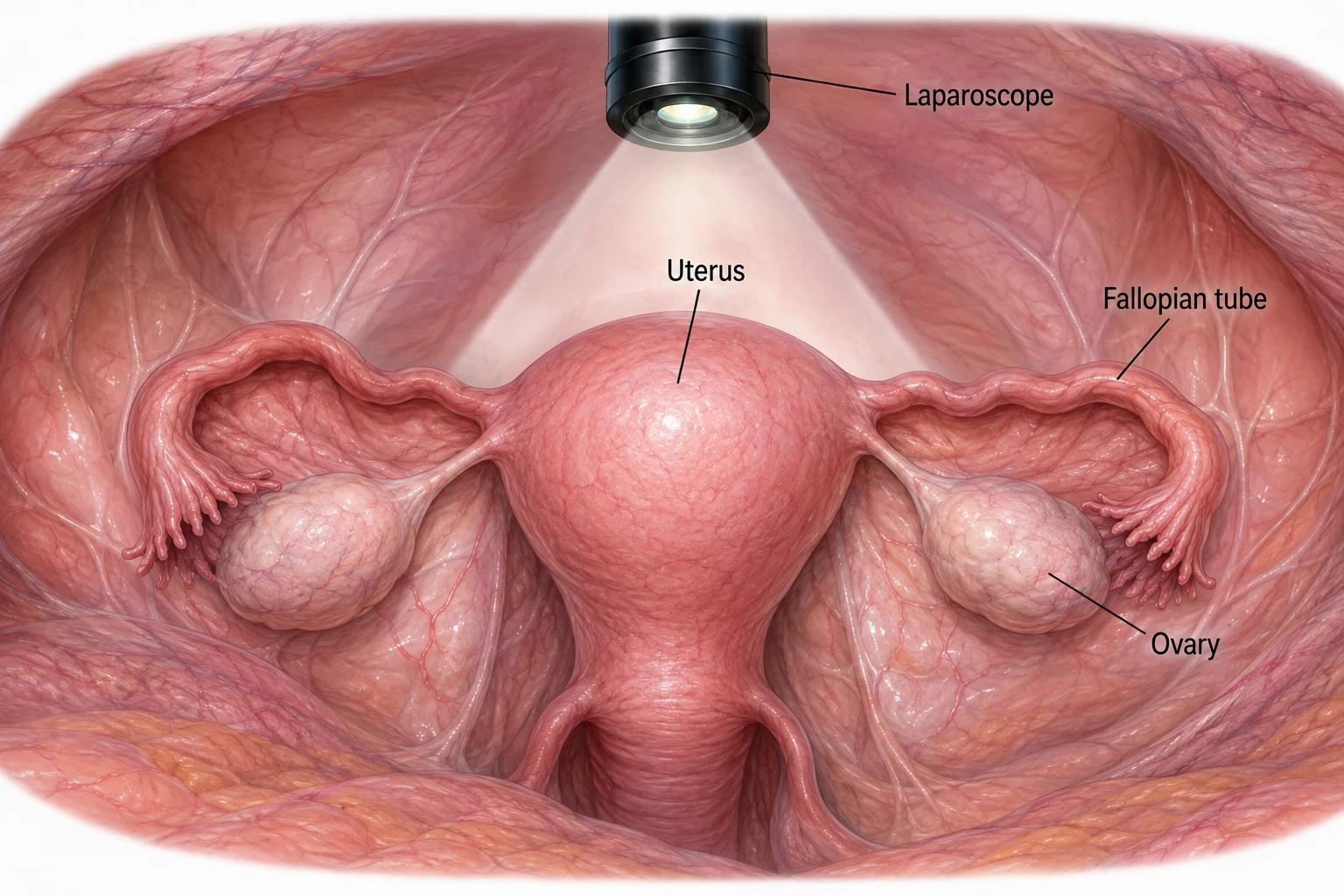
Diagnostic laparoscopy allows direct visualization of the pelvic organs when symptoms, examination, and non-invasive testing do not provide enough information and the result is expected to change care. It may be used for selected cases of pelvic pain, suspected endometriosis, infertility, or unclear pelvic findings. It is not routinely required to diagnose endometriosis. When an agreed and treatable finding is identified, treatment may be performed during the same procedure.
How It Works
The procedure is performed through small abdominal incisions (typically 5-10 mm) using a camera and specialized instruments. Carbon dioxide gas is used to gently expand the abdomen, creating space to view the pelvic organs clearly.
Indications
- Suspected endometriosis when empirical treatment has not helped, is unsuitable or is not desired, or surgery is otherwise indicated
- Chronic pelvic pain when non-invasive evaluation is inconclusive and a surgically treatable cause is suspected
- Assessment of pelvic adhesions
- Evaluation of pelvic masses or cysts
- Infertility investigation
- Assessment of ectopic pregnancy
What to Expect
- Performed under general anesthesia
- Usually a day-surgery procedure
- 2-4 small incisions on the abdomen
- Recovery typically 1-2 weeks for return to normal activities
- Mild shoulder discomfort from residual gas is common and resolves within days
Benefits
- Minimally invasive with small scars
- Direct inspection and the option to obtain tissue for pathology
- Possible treatment when an anticipated and consented finding is found
- Shorter recovery compared to open surgery
- Histologic confirmation of some conditions; a normal laparoscopy or negative biopsy does not rule out every cause of pelvic pain
Risks
As with any surgical procedure performed under general anesthesia, diagnostic laparoscopy carries potential risks:
- Injury to bowel, bladder, ureters, or blood vessels — uncommon but possible during entry or instrumentation
- Bleeding — occasionally requiring transfusion
- Infection — wound infection or pelvic infection
- Venous thromboembolism — deep vein thrombosis or pulmonary embolism, rare
- Conversion to open surgery — occasionally necessary if adequate visualization or safe access cannot be achieved laparoscopically
- Shoulder-tip pain — common and temporary, caused by residual carbon dioxide gas irritating the diaphragm
- Port-site hernia — rare, occurring at the incision sites
Laparoscopy may find no visible cause for symptoms, and surgery does not guarantee pain relief. The expected benefit should be weighed against these risks and against non-surgical options.
Sources
Clinical content updated July 2026. Source: ESHRE Guideline: Endometriosis (2022).