Overview
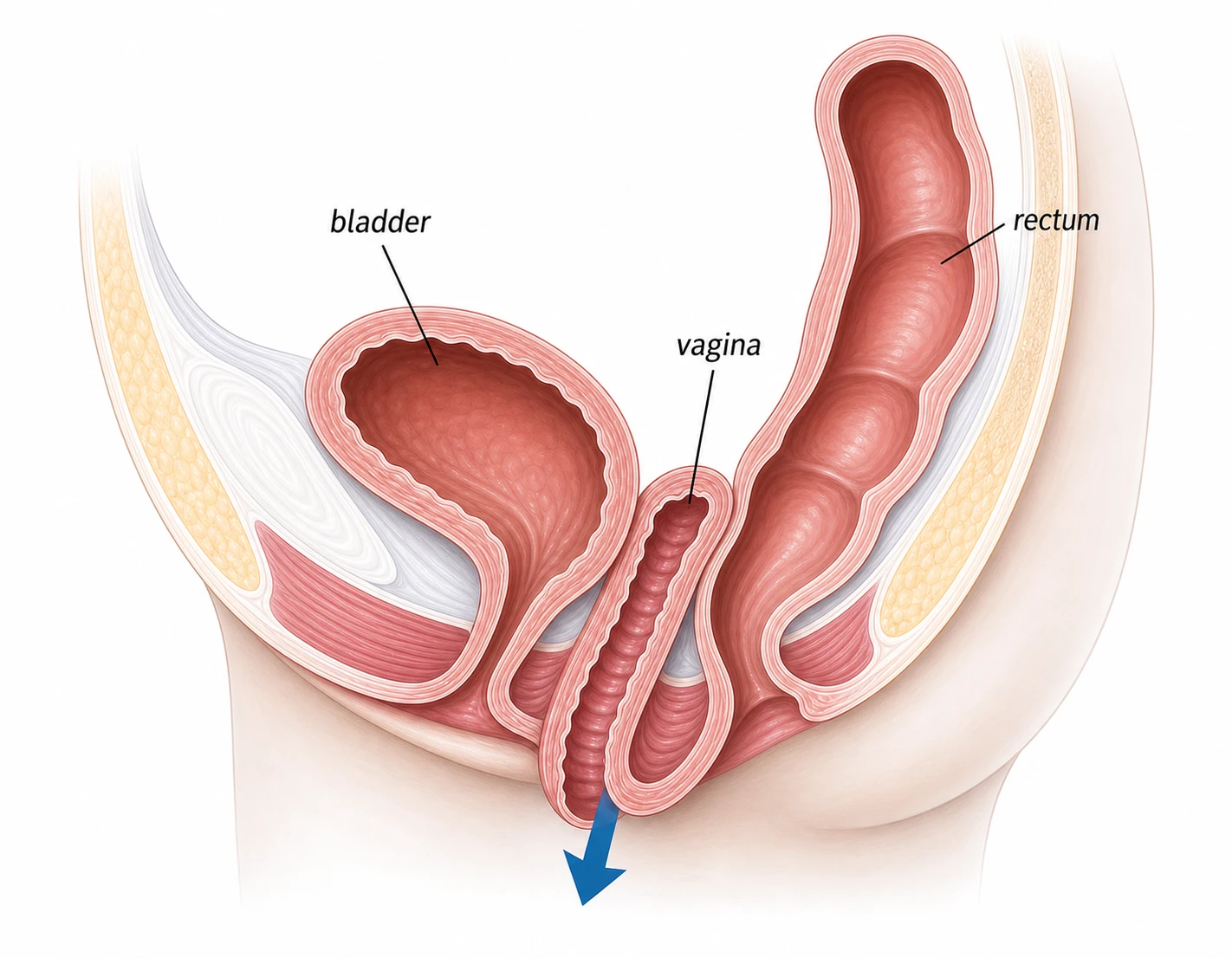
An example of vaginal vault prolapse after hysterectomy, before treatment. This image shows the prolapse, not the closure procedure.
Colpocleisis is a surgical procedure that closes most or all of the vaginal canal to support prolapsed organs. It is an option for patients with advanced prolapse who do not want future vaginal penetration, including some patients who would prefer a shorter operation than reconstructive surgery.
When Is Colpocleisis Appropriate?
- Severe or recurrent pelvic organ prolapse
- Patients who do not want future vaginal penetration
- Patients with significant comorbidities that increase surgical risk
- Patients who prefer an obliterative rather than reconstructive procedure after counselling
Advantages
- Often shorter than reconstructive prolapse procedures
- Durable support for many appropriately selected patients
- Can often be performed under spinal or regional anesthesia
- Minimal blood loss and shorter recovery
The Procedure
The vaginal walls are stitched together, obliterating the vaginal canal and keeping the prolapsed organs in their correct position. An anti-incontinence procedure may be performed simultaneously if stress incontinence is present or anticipated.
Limitations
- Permanent loss of vaginal penetration — this is not considered a reversible procedure
- External sexual sensation, intimacy, and orgasm can remain possible; the operation does not eliminate all sexual function
- Cervical cancer screening may no longer be possible in the usual manner
The uterus and cervix, if present, should be assessed before surgery when indicated because future access to them will be limited.
Recovery
- Hospital stay: typically 1 night
- Return to light activities: 1-2 weeks
- Full recovery: approximately 4-6 weeks
Risks and Expectations
Colpocleisis provides durable bulge-symptom relief for many patients, but recurrence and regret remain possible. Because future vaginal penetration will not be possible, values and sexual goals should be discussed explicitly before consent. Potential risks include:
- Urinary tract infection
- Constipation — common in the short term
- Hematoma — collection of blood at the surgical site
- Bleeding requiring transfusion — uncommon for this procedure
- Bladder or bowel injury — rare
- Venous thromboembolism — rare
Sources
Clinical content updated July 2026. Source: AUGS Patient Resources.