Why Exercise Your Pelvic Floor?
The pelvic floor muscles form a supportive platform between the pubic bone and tailbone. They support the bladder, uterus, and rectum, and play an important role in continence and sexual function. Like any muscles, they can be strengthened through regular exercise.
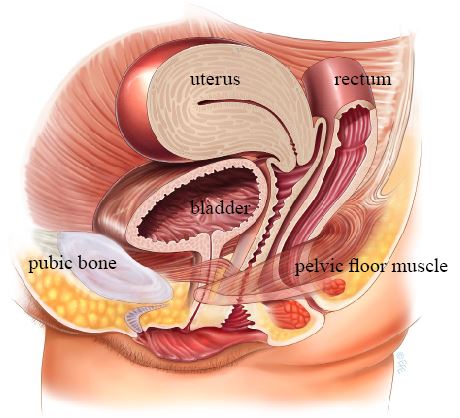
When pelvic floor muscles are strong, they keep the urethra closed and support the pelvic organs effectively:
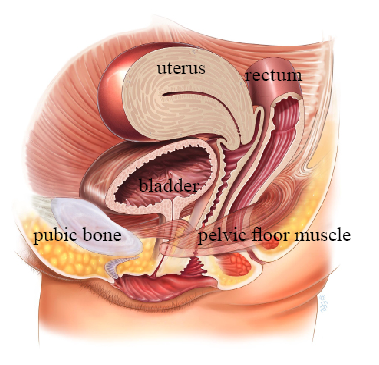
When pelvic floor muscles are weak or poorly coordinated, they may not provide enough support or closure, which can contribute to incontinence.
Finding Your Pelvic Floor Muscles
Before you can exercise these muscles, you need to identify them correctly:
- Sit or lie comfortably and relax your thighs, buttocks, and abdomen
- Squeeze the muscles you would use to stop the flow of urine midstream
- You should feel a "lifting and squeezing" sensation inside the pelvis
- Try to avoid tightening your buttocks, thighs, or abdomen — focus only on the pelvic floor muscles
- Do not hold your breath — breathe normally throughout
Note: The "stop urine test" is only for identifying the muscles. Do not practice exercises while actually urinating, as this can interfere with normal bladder emptying.
A Starting Exercise Pattern
The correct program depends on your starting strength, endurance, coordination, symptoms, and ability to relax fully. A pelvic floor physiotherapist may recommend fewer repetitions or a different focus.
Slow Contractions (Endurance)
- Squeeze and lift your pelvic floor muscles
- Hold for up to 10 seconds (start with whatever you can manage and build up)
- Relax completely for 10 seconds
- Repeat 10 times
Quick Contractions (Power)
- Squeeze and lift quickly with a strong contraction
- Relax immediately
- Repeat 10 times
Frequency
- Practice regularly using the number of contractions recommended for you
- A supervised program is commonly continued for at least 3 months before its full effect is assessed
Tips for Success
- Be consistent — set reminders or link exercises to daily activities (e.g., after meals)
- Quality over quantity — a good, full contraction is better than many weak ones
- Progress gradually — increase hold times and repetitions as you get stronger
- Practice in different positions — sitting, standing, and lying down
- Use "the knack" — consciously contract your pelvic floor muscles before coughing, sneezing, lifting, or laughing
When to Seek Professional Guidance
A pelvic floor physiotherapist can:
- Confirm you are performing the exercises correctly
- Develop a personalized program
- Use biofeedback tools to help you learn proper technique
- Monitor progress and adjust the program
Seek assessment before strengthening if you have pelvic pain, pain with penetration, difficulty emptying your bladder or bowel, or symptoms that worsen with Kegels. In a high-tone or tender pelvic floor, treatment may focus on relaxation and manual therapy rather than strengthening.
Expected Results
Supervised pelvic floor muscle training improves stress urinary incontinence for many women, but response varies. Correct technique and a program matched to the individual are more important than reaching a fixed number of contractions. Maintenance exercise may help sustain benefit.
Sources
Clinical content updated July 2026. Source: NICE Guideline: Urinary Incontinence and Pelvic Organ Prolapse in Women.