What is a Bladder Diary?
A bladder diary is a structured record of your fluid intake, voiding frequency, urine volumes, and episodes of urgency or leakage over several days. It provides objective information that assists in diagnosis and guides treatment planning for urinary symptoms.
Why Keep a Bladder Diary?
A bladder diary helps your doctor understand:
- How much and what types of fluid you drink
- How often you urinate during the day and night
- How much urine your bladder holds
- When and how much leakage occurs
- What activities trigger leakage
- How often you experience urgency
This information is more reliable than recall alone and helps identify patterns that can guide treatment.
How to Complete Your Diary
Record the following over 3 consecutive days (ideally including one weekend day):
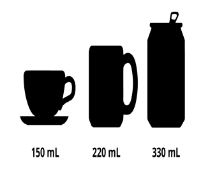
The containers shown are examples only. Cup, mug, glass, and bottle sizes vary, so measure the containers you actually use and record their volume in millilitres.
What to Record
- Time: Note the time for every entry
- Fluid intake: What you drank and how much (measure in mL if possible)
- Voiding: Each time you urinate, measure the volume (a measuring jug in the toilet works well)
- Urgency: Rate the urgency on a scale of 0-3 (0 = no urgency, 3 = almost leaked)
- Leakage episodes: Note any leakage and what you were doing when it occurred (e.g., coughing, rushing to toilet)
- Pad use: How many pads changed and how wet they were
Tips for Accuracy
- Use a measuring jug to measure urine volumes
- Record entries as they happen rather than from memory
- Include overnight entries
- Note caffeine, alcohol, and carbonated drinks specifically
Interpreting the Diary
There is no single normal value for everyone. Fluid needs, voided volumes, daytime frequency, and nighttime urination vary with age, medications, medical conditions, sleep, climate, and activity. Your clinician will interpret patterns in context rather than judging one entry against a fixed target.
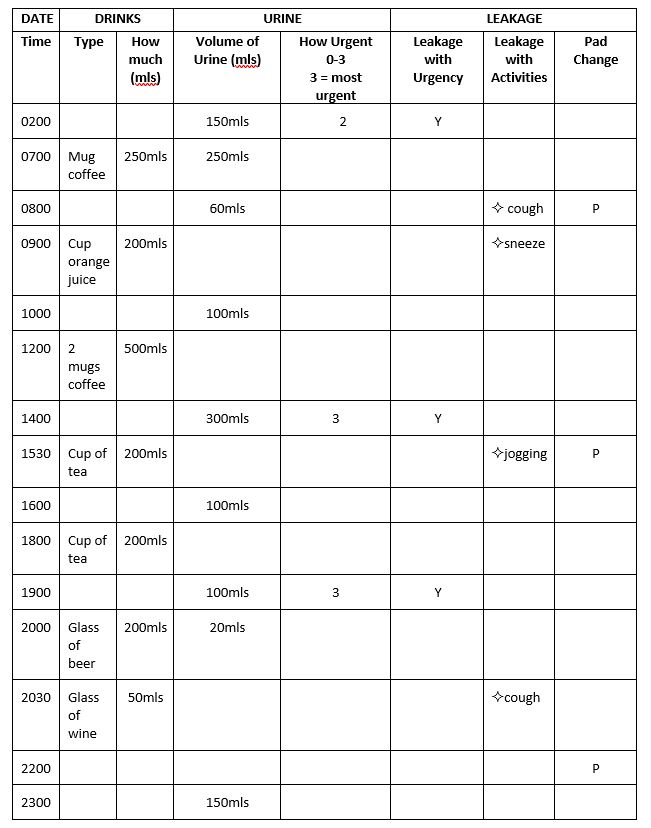
Sample Completed Diary
The following is an example of a completed bladder diary for reference:
Bring Your Diary
Please bring your completed bladder diary to your appointment. It is one of the most useful tools in evaluating urinary symptoms.
Sources
Clinical content updated July 2026. Source: International Continence Society: Bladder Diary.