What are Recurrent UTIs?
Recurrent urinary tract infections (UTIs) are defined as two or more infections within six months or three or more within twelve months. UTIs are among the most common bacterial infections in women, and recurrence is a significant clinical problem affecting quality of life and requiring careful evaluation and management.
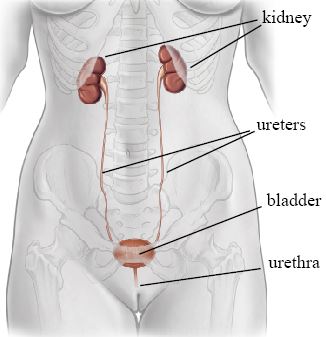
Symptoms
- Burning or stinging with urination (dysuria)
- Urinary frequency and urgency
- Lower abdominal or pelvic discomfort
- Cloudy or strong-smelling urine
- Blood in the urine (hematuria)
- Incomplete bladder emptying sensation
Risk Factors
- Postmenopausal estrogen deficiency — changes in vaginal flora and tissue health increase susceptibility
- Sexual activity — particularly with new partners or frequent intercourse
- Incomplete bladder emptying — from prolapse, voiding dysfunction, or elevated post-void residual
- Pelvic organ prolapse — can impair bladder emptying
- History of UTIs in younger years
- Genetic predisposition
- Diabetes and immunosuppression
- Catheter use
Evaluation
- Urine culture to confirm infection and identify the causative organism
- Assessment of voiding function to evaluate for incomplete emptying
- Pelvic examination to assess for prolapse, atrophic changes, and other contributing factors
- Post-void residual measurement
- Further investigations (cystoscopy, imaging) in selected cases when other pathology is suspected
Prevention Strategies
Behavioral Measures
- If your usual fluid intake is low and you have not been advised to restrict fluids, increasing water intake may reduce recurrences. There is no single intake target that is right for everyone.
- Avoiding constipation
- Addressing incomplete bladder emptying when it is present
Post-coital voiding, wiping direction, and changes in routine bathing or hygiene have not been shown to prevent recurrent UTI. A UTI is not a sign of poor personal hygiene.
Vaginal Estrogen Therapy
For postmenopausal women, local vaginal estrogen is one of the most effective prevention strategies. It restores the normal vaginal flora and pH, reducing colonization by uropathogenic bacteria. Systemic absorption is minimal at standard doses.
Other Prevention Measures
- Cranberry products — may be offered as an option; formulations and active ingredient amounts vary
- D-mannose — current evidence suggests D-mannose alone may not prevent recurrent UTI
- Methenamine hippurate — a non-antibiotic preventive option for some patients after review of contraindications and interactions
Antibiotic Prophylaxis
When behavioral and non-antibiotic measures are insufficient, low-dose antibiotic prophylaxis may be considered:
- Continuous low-dose prophylaxis for 3-6 months
- Post-coital prophylaxis for women whose UTIs are related to sexual activity
- Patient-initiated treatment for selected patients, ideally with a urine sample collected before antibiotics when practical
Important Considerations
Visible blood in the urine, or blood that persists after a documented infection has been treated, should be assessed. The need for imaging or cystoscopy depends on factors such as age, smoking history, amount and persistence of blood, prior pelvic radiation, and other cancer risks rather than a single age cutoff.
Persistent or atypical symptoms warrant further evaluation, especially when urine cultures are repeatedly negative, because vaginal conditions, stones, overactive bladder, and bladder pain syndrome can cause overlapping symptoms.
When to Seek Prompt Care
Seek same-day medical assessment for UTI symptoms with fever, chills, pain in the side or back, persistent vomiting, pregnancy, or feeling systemically unwell. Severe weakness, confusion, difficulty breathing, or rapidly worsening illness requires emergency care.
Sources
Clinical content updated July 2026. Source: AUA/CUA/SUFU Guideline: Recurrent Uncomplicated Urinary Tract Infections in Women (2025).